Wheels within wheels

Liam Clarke, in his article in the Belfast Telegraph on 18 June says: “the Castlereagh raid allowed the IRA to identify the entire agent network in Belfast through a process of elimination.”

It is interesting that this observation, relating to events which occurred in 2002, passed without apparent comment in the media.

Was the “raid” in fact a hostile act by a devilishly cunning SF/IRA unit or was it staged? Was the insider in fact Larry the Chef, a state agent, and was the object of the state to further destabilise SF/IRA?

Larry was never prosecuted, a decision made jointly by the police, who took him out of the jurisdiction and the PPS.

Guess who was asked to investigate? A man call Chilcott.

Could Barney Rowan help?

Imagine the scene at the army council when the product of the raid was tabled. “Gerry, I never knew….you too Marty….gosh and you , and you”. It is unlikely that anyone on the army council failed to make the grade.

So why the silence both from the media and from SF/IRA?

It’s the Peace Process Stupid!

The wonderful world of the PPS

Aside from the considerable interest the press and public would have taken had Barra appeared as a witness for the defence or the prosecution  [see Larkin para 4.49-4.51] in the trial of Liam Adams, a number of other points arise from the Starmer and Larkin reports.

1. Why was Gerry Adams, Barra’s former client, not called in the second trial? The answer to the justice committee from the Deputy director was “technical reasons” [ a well known legal term] and the volume of potential disclosure. One wonders if this disclosure related to Gerry’s terrorist activities and/or his usefulness to the state. It may well be another example of where intelligence held by the state intrudes into the administration of justice.

2. Whilst taking responsibility for the AA/BB/Cahill shambles Barra blamed the two prosecuting barristers. Asked by the justice committee about his civil servants , his response was that of the three involved , one had retired and the other two were not in the places they had been when the events happened. This is an obscure remark. Does it mean that they have been sent to the PPS equivalent of the Russian Front or Siberia? He went on to tell the committee that neither would be disciplined because their actions “did not raise issues of indiscipline”. So there you have it. No harm will befall the civil servants, they will eventually retire on their inflation proofed pensions. Meanwhile they may be performing incompetently in your case, dear reader. Their names have never been made public. Meanwhile the two barristers face a public disciplinary hearing.

3. Moving on from that demimonde , Barra was asked a number of questions by Edwin Poots. Barra initially declined to respond when Poots  asked him what ‘he put his thing in me” might mean. Having unsuccessfully appealed to the chairman for protection, he stated that it was a description of penetration. Poots point was that that remark by the complainant re Liam, her father, constituted a complaint of rape and that it had been heard by Gerry, bringing him within the ambit of the then legislation on with holding information. Larkin concluded that Aine’s evidence re Gerry called at the very least for clarification.

4. Alban Maginness told Barra that Larkin’s report gave the PPS “a clean bill of health”. Let’s examine that. The real nub of the PPS performance is set out by Larkin at paras 6.17- 6.22. Larkin notes that in relation to the assessment of the evidence against Gerry, neither the acting director nor senior counsel appear, from the acting deputy director’s minute, to have been provided with the two transcribed interviews of Aine. Nor did senior counsel have access to a minute from the directing officer. So , another PPS communication failure. Larkin was not asked to comment on the decision not to prosecute Gerry but it is clear that had communications been working properly , at the least the PPS would have sought clarification from Aine or Gerry. Larkin describes the “obvious steps” that should have been taken at 6.40. This all leaves out of account Larkin’s view that the PPS did not follow its own procedures.

5 Enter the PSNI, stage left. The police told the PPS that Gerry Adams had “quite rightly…Aine’s welfare at the forefront throughout”. Contrast that astonishing statement with his performance under cross-examination in the first trial. Is this a genuinely held belief by the PSNI or was it another smokescreen? They lobbied the PPS for no prosecution of Gerry “in the public interest” Did it fall within example [x] in the PPS list of some grounds for not prosecuting in the public interest ” where details may be made public that could harm sources of information, international relations or national security”?

6. A number of the members of the justice committee voiced concern at the performance of the PPS. It is hard to disagree.

6. Larkin’s report was spun by the PPS as a vindication of its activities. It is no such thing.

The murderers of my parents

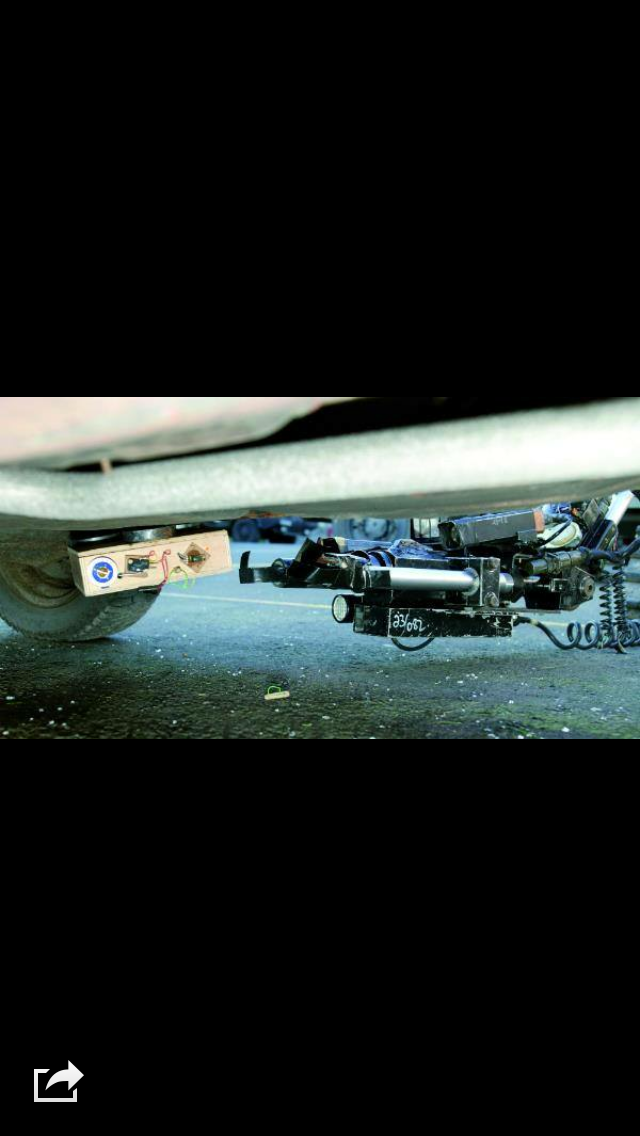
On this day, twenty five years ago, my Dad drove his car out of the driveway and parked it on the road. He had been retired from the RUC for three years, having been mortared at New Barnsley, where his colleague Dessie Dobbin, was killed. It is likely , given the forensic findings, that he checked underneath it before he moved it from the drive. At about ten o’clock, he and my mother drove off. About four hundred yards down the road a bomb, placed underneath the vehicle exploded. My Dad was dead on arrival at the Mater Hospital. My Mum , having sustained severe head injuries , died the next day.

PIRA claimed responsibility and Adams said it might not have been a good operation. But then , he was never in the IRA.

The cause of Irish unity was not progressed one inch but my daughter never knew her Grandparents.

The persons responsible for these murders were as follows.

First there had to be an active service unit, carrying out these brave acts. There were three operational in the greater Belfast area in 1990.

Bomb Team A, as I shall call it , was comprised, inter alia, of Rosaleen McCorley MLA and James Donnelly. They were arrested in January 1990 in the act of placing a bomb under a policeman’s car.

Bomb Team B had in its ranks  Rosena Brown and Davy Adams [brother of Gerry]. It might have had Martin McGartland also , but he has denied this to me. Brown, Paul McCullough and Stephen Canning were arrested in  1992 in possession of a bomb.

Bomb Team C was comprised of Martin McGartland, Fitzsimmons and McFadden. They carried out a number of operations before McFadden and Fitzsimmons were arrested in North Belfast in December 1990, in possession of two bombs and a gun. Interestingly, McGartland was not at the scene.

Therefore in June 1990 , either bomb team B or C could have carried out the attack.

Councillor Sean Keenan took part in the attack. He was rewarded for his efforts on 7 June when a UDA/UFF team tried to kill him. He had already been shot in the company of Gerry Adams. Keenan’s house was heavily fortified. I wonder why? Did the state pay for it?

The attack was scouted by Sean Maguire , from Ardoyne. He was an “intelligence officer” and a state agent , a tout. He betrayed Larry Marley to the Loyalists, in order to please his British masters. He is now PR adviser to Martin McGuinness and can be spotted, if you are quick enough , in the background,behind Grandpa McGuinness on the Hill. I wonder where Sean banked his money?

The operations officer, responsible for coordinating attacks, was Paddy Fern. The bomb was provided by McCartney, who was Quartermaster.

The police have told me that they know the identities of the bomb makers. Bombs were kept in the “Rock Streets” off the Falls.

Next in the chain of command was Spike Murray.

The OC Belfast was Brian Gillen an agent of the Crown.

The operation had to be approved by Martin McGuinness, head of northern command. Read Ed Moloney’s book about this [p347] and also the allegations made by Scappaticci, in conversations with journalists.

Both the RUC Special Branch [SB] and the Army’s Force Research Unit [FRU] were involved in the recruiting and handling of agents. Some agents were placed in organisations, others were recruited from their ranks.

The purpose of an agent was to report on the activities of the terrorist group so as to enable the state to disrupt its activities and arrest its members.

There were no rules governing the use of these agents in 1990, particularly in relation to the criminal actives in which they might participate. Issues arose as to what would happen if an agent told his handlers that he was about to take part in a crime or if he declared that he had in fact committed an offence.

De Silva documents the attempts made by the RUC and the Army to obtain guidance from the state. He also documents how the state consistently failed to give such guidance and deliberately dragged its heels on the issue.

Without any structure both SB and FRU worked in a vacuum. They had agents placed in the heart of Sinn Fein/IRA, many are still there. Apart from Donaldson and ‘Scap’ obviously. I’m not convinced that Scap is Stake Knife. What about Padraic Wilson, does he fit the profile?

SB and FRU played God. De Silva documents how at one time the Loyalists planned to kill Oliver Kelly, solicitor. This seemed like a good plan until the state placed a higher value on him, because he was a moderating influence on hunger strikers, whereupon FRU told the Loyalists to back off. The same happened to a plan to kill Adams in 1987. Why was Adams so valuable then? Finucane was apparently disposable.

In assessing a planned terrorist attack SB/FRU considered two issues:

1. The value of the target to the state, or not.

2. Any potential danger to their “asset’ the agent.

Consider my list of agents, above. They must have provided SB/FRU with a wealth of information. Not every operation could be stopped because the agent’s colleagues and masters would become suspicious. There are only so many times that extra police can flood an area or an Army checkpoint appears.

So every so often a attack has to get through, even though SB/FRU have been warned. Or perhaps the agent ‘forgot’ to tell his handlers.

So, on the morning of 6th June 1990, nobody came to the rescue of James and Ellen Sefton.

After my Dad had checked his car and left it outside the house, PIRA planted a bomb underneath it. I know this because the ATO opined that the car travelled as far as it did because the timer, set for an hour, had not wound down before  the start of the journey.

Ultimately, the state is responsible for their deaths.

My parents had a right to life and an expectation that the state would protect them. Instead the state protected the agent and the process. Read the documents in de Silva relating to the prosecution of Nelson to get a feel for how far the state would go to protect the process.

Although the RUC and FRU were not assisted by the state in how to run informers,that is no excuse. The RUC was staffed by ordinary men and women from this Province, some of whom would have known my Dad. Shame on them for being part of an organisation which practised this witchcraft.

Perhaps even now, twenty five years on, one of them might have the decency to come clean, before they have a chat with their Maker.

I am , of course, leaving aside the prospect of a Republican having a conscience.

I am not alone in having suffered this injustice. I am not , by a long way, the worst example.

I hope, though, that others, similarly afflicted may be given some encouragement to enquire into their own tragedies.
The partial repayment of a debt

Today I lodged papers with the Police Ombudsman. Details will follow. Essentially, I contend that PIRA was so completely penetrated by the state in 1990 that the murders of my parents were the state’s responsibility. This the police failed to investigate. I have given details of the PIRA informers, whose names I know and I have asked the Ombudsman to examine all state files. The exercise has taken a year of my life, which I have gladly given, for my parents. Other events have given me this opportunity, which I failed to take for twenty four years. A number of people who treated me badly during that time and who gave me no support will have their own God to answer to. I thank those who have stood by me through all my travails for these years. I thank those from both communities, who, in the last twelve months have given me information and insight. The PSNI and the PPS failed to come up to the mark. Let’s see if the Ombudsman is hewn from different wood.

Starmer review

Tucked away at para 1.13.

“It cannot be said with certainty whether the outcomes of these cases would have been different if particular decisions had been taken differently.”

For the layman, imagine Match of the Day and the endless slow motion replays and the blethering of the pundits.  “Well, Alan, should he have scored there?”

“Well maybe not Gary, but his decision making has to be in question”

I wonder what the report cost? Is anyone interested?

Belfast Telegraph misses the point

Today’s ‘Editor’s viewpoint’ , unsurprisingly, misses the point completely. The test for prosecution is not and never was an issue in MC,AA and BB. It does not feature in Starmer’s report.

Study instead Pournelle’s Iron Law of Bureaucracy and the Peter Principle.

Look at the officials involved in this shambles and ask if they were up to the job.

Ask them what the organisation expected of them. The answer will be ‘stats’.

In my own experience , the high command  was not interested in issues about victims, for example , about the evidence of young children , there were no medals for that.

Every organisation is taken over by the bureaucrats and every person in it is promoted beyond his/her level of ability. The PPS is no different.

There are no bad soldiers only bad officers

Kier Starmer made a number of criticisms of the PPS. Any prosecuting barrister could have told him of the failings if he had cared to ask. The service provided to victims has always been wanting. Frequently the defence is represented by senior and junior counsel attended by a solicitor and frequently the prosecution is in the hands of junior counsel or employed counsel attended by an unqualified clerk.

Worse still is the enormous pressure place on these clerks, who are left to be the conduit between victims, the witnesses, the court, the police, the directing officer and counsel. None of the PPS high command, mentioned by Starmer, has ever had a career prosecuting  in the Crown Court and they are rarely seen there.

The problems suffered by the three complainants are not new. The victim is less well looked after than the accused. For example in Craigavon, the PPS has no dedicated , private, room in which to consult with victims. It was taken off them without a fight.

Of course like all organisations, found out at last , the promise is for new organisational structures. I’m surprised that nobody said “we have learned lessons”.

All the reorganisation in the world will be of no avail until there is a culture change at the heart of the PPS. Less obsession with ‘stats’ and more interest in the court process would be a start. The Irish Times  today says  that the two counsel involved have reported themselves to the Bar Council. Let’s see what happens to the civil servants, responsible for delivering the service.

Meanwhile Napoleon’s dictum is as relevant as ever.

Play up and play the game!

Trevor Ringland’s essay on Special Branch, in the Newsletter on 14th May is worth a read.

Trevor, solicitor, British Lion and sometime unionist , while making valid points about the standard of BBC journalism and the use of victims on its programmes, is caught up in the idea that , like good sporting types , the British Establishment ought to have gone after the ‘cads”.

The inescapable fact is that the state , in pursuit of peace in the City of London and elsewhere in the Shires, perverted not only the stream of justice in our society but also society itself.

His naive view that there should have been “a very active investigation” into such chaps is risible to anyone who has the least grasp of the last forty years.

God moves in a mysterious way…

…….His wonders to perform….

After Hymn singing in Ballymena and poor manners exhibited by Robinson in East Belfast, I wonder why God deserted the DUP in South Antrum?

I suspect that the answer is that reasonably liberal unionists wanted the same and a man who showed some personal interest in the constituency.

Onwards now with Danny, not an intellectual giant but a decent man. Willie will have more time for pastoring and singing.

Onwards too with the final push for justice for my parents and for compensation for hundreds of families affected by Libyan Semtex.

Meanwhile in Frazerworld, not a sign of a document  from the ROI or an inquest, just the same old bigotry.